Is the True Wireless Earbuds Still Good in 2026? Long-Term Review
I've been using the True Wireless Earbuds for eight months now—everyday commuting, workouts, long calls, and a fair share of weekend lounging with music and podcasts. When I bought them late in 2025 they looked like a strong value: compact case, active noise cancellation (ANC), promised multi-day battery life, and a companion app with an EQ. In my experience, long-term ownership reveals a lot that a weekend review won't touch: battery degradation, case durability, how ANC holds up after firmware updates, and the daily realities of touch controls and call quality.
What I used them for (and how often)
My use pattern was pretty heavy: roughly two to three hours a day on work calls, an hour during walks or commuting, and several shorter sessions for podcast listening and workouts. I charged the case nightly every few days and used the wireless charging pad a handful of times. I also carried them in a backpack and a jeans pocket, so they experienced normal jostling and temperature swings.
Overall impression after eight months
In short: I still reach for these earbuds most days, but not without some caveats. They deliver excellent value for sound and features at the price point they were launched. The highs stay clear and the midrange is pleasing for vocals, which is why I keep them in my rotation for podcasts and Zoom calls. However, the ANC isn't class-leading, the touch controls can be fussy, and battery life has declined noticeably compared to day one. If you want uncompromising ANC, top-tier call mics for outdoor wind, or a premium fit-for-all ear shapes, there are better (and usually more expensive) options. But for everyday listening, commuting, and general multi-device use, they're still a compelling pick in 2026.
Detailed review and analysis
Build quality and case
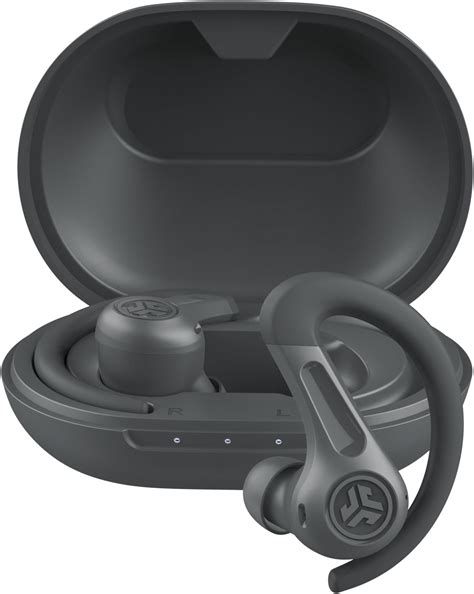
The earbuds themselves feel solid and pleasantly lightweight. The matte finish resists fingerprints, though the charging case attracts smudges and pocket lint. After eight months the case hinge started to show a little play—nothing catastrophic, but you can feel it if you open the case frequently. The case supports wireless charging, which I used occasionally; wireless charging is convenient but slower than the wired USB-C fast charge. The magnetic alignment for the earbuds is reliable and the LEDs are bright enough to tell charge state at a glance.
Fit and comfort
Fit is where these earbuds shine for me. They come with multiple silicone tip sizes and I settled on the medium-plus set for a snug seal. I wore them for multi-hour stretches without soreness, though people with narrow ear canals might find them a touch bulky. I noticed the fit affects ANC performance significantly: get a good seal and the ANC feels much more useful; get a bad seal and the ANC barely does anything beyond some low-frequency reduction.
Sound quality
What I found was a surprisingly mature sound profile for this price tier. The bass is present and punchy without swallowing mids, the mids are forward and natural—great for vocals—and the highs are detailed without being overly bright. In my experience, the earbuds handle acoustic instruments and vocal-heavy genres very well. At higher volumes the midrange becomes a touch congested, and if you push bass-heavy electronic music you'll notice some bloom, but that's common at this price point.
The companion app's 5-band EQ made a big difference; I prefer a slight mid-bump and a small treble lift, and that tuning made the earbuds sound closer to headphones I like more. There's also a "custom" preset that lets you tune to taste, and I appreciated that the app stores EQ profiles on the earbuds so the sound stays consistent when switching devices.
Discover deals on Audio & Headphones — updated daily.
Shop Amazon →Active Noise Cancellation and Transparency
The ANC is effective at knocking down steady low-frequency noise—think bus engines and airplane hum—but it's not as transparent or adaptive as flagship systems in 2026. It does a decent job on trains and buses, and I've used it successfully for focus sessions in co-working spaces. However, it struggles with sharp, irregular noises (doors slamming, loud voices) and tends to leave high-frequency chatter intact.
Transparency mode is natural-sounding and useful for short conversations or announcements. I liked that the mode doesn't completely amplify every sound into an uncomfortable loudness; it's a balanced passthrough rather than a raw mic feed.
Connectivity, latency, and multi-device use
Connectivity has been solid overall. The earbuds use Bluetooth 5.3 with multipoint support, which means I could be connected to my laptop and phone simultaneously and switch audio smoothly in most cases. I did see occasional one-second stutters and a couple of dropouts when my phone was in the back pocket while walking through crowded areas—uncomfortable but infrequent.
For gaming and video I noticed a small but perceptible lip-sync lag in standard mode. Enabling "Game Mode" in the app reduced latency significantly and made gam…
Battery life and charging
On day one the manufacturer claimed up to eight hours on a single charge with ANC off. In my tests I averaged about 6.5–7 hours with a moderate volume and ANC active. The case added two full charges for a total of roughly 26–30 hours of listening—which lined up with my real-world use where I could go two to three days between case charges.
After eight months I noticed battery degradation: single-charge runtime dropped to about 5.5–6 hours with ANC on. That decline is normal for lithium-ion batteries but worth noting if you expect the same runtime year-over-year. Quick-charge technology is very handy: 10–15 minutes in the case gives you roughly 1.5–2 hours of listening, which saved me more than once on travel days.
Microphones and call quality
Call quality was generally good indoors: my coworkers said I sounded clear and natural on Zoom and Teams calls. Outdoors in wind or heavy traffic the microphones struggled more; wind noise reduction helps but isn't perfect. One thing I noticed as a real-world annoyance: the left earbud's mic picks up more clothing rustle when the phone is in my lap, making calls slightly less consistent depending on how I sit.
Find top-rated Audio & Headphones products at great prices.
View Offers →Software, updates, and app
The companion app is functional and gets firmware updates. One notable firmware update during my ownership improved multipoint stability and slightly improved ANC algorithms. The EQ, presets, and firmware update process are all intuitive—I'd recommend checking for updates when you first set them up because tweaks can meaningfully change performance. The app also includes a basic fit test that helped me find the best tip size.
Durability and long-term issues
So far there have been no outright failures—no dead buds or charging contacts refusing to work—but the case hinge wear and the slight battery degradation are real. The IPX4 sweat resistance made them reliable during workouts, but I avoid submersion and heavy rain. The silicone tips wear out eventually and need replacing; keeping spares is a good idea.
Pros & Cons
- Pros: Natural mids and clear highs, comfortable long-wear fit, useful ANC for commuting, strong multipoint support, companion app with 5-band EQ and firmware updates, reliable magnetic case alignment, wireless charging support, quick-charge feature.
- Cons: ANC not best-in-class for irregular/high-frequency noise, touch controls can be inconsistent (accidental taps or missed taps), battery life declines over months, case hinge shows wear, outdoor call performance in wind is only average, occasional Bluetooth stutter in crowded RF environments.
How they stack up (comparison)
| Feature | True Wireless Earbuds (this review) | Typical Flagship (2026) | Typical Budget Option |
|---|---|---|---|
| Sound profile | Balanced with clear mids; good for vocals | More refined tuning, better spatial processing | Boomy bass, muddy mids |
| Active Noise Cancellation | Solid on low-frequency hum; struggles with irregular noise | Adaptive ANC with excellent high-frequency reduction | Basic passive isolation; weak/no ANC |
| Battery life (buds) | 6.5–7 hrs (new), ~5.5–6 hrs after 8 months | 7–10 hrs depending on model | 4–6 hrs |
| Case capacity | ~26–30 hrs total with case | 30–40+ hrs | 12–24 hrs |
| Connectivity | Bluetooth 5.3, multipoint, occasional stutter | Bluetooth LE Audio / LC3 support & rock-solid multipoint | Bluetooth 5.0, single-device or flaky multipoint |
| Call quality | Good indoors; average outdoors | Excellent with multi-mic beamforming | Poor to average |
| Durability | IPX4, case hinge wear after months | Better materials, stronger hinges | Mixed, often less robust |
Buying guide: who should consider these earbuds in 2026?
After months of use I can point you to the kind of buyer who will be happiest with these earbuds, and the kind who should look elsewhere.
Buy if...
- You're looking for a strong everyday pair for commuting, podcasts, and Zoom calls without paying flagship prices.
- You value natural mids and vocal clarity (podcasts, audiobooks, singer/songwriter music).
- You want decent ANC for steady noise (trains, buses, office hum) but don't need the absolute best in the market.
- You like fiddling with an EQ and appreciate companion app features and firmware updates.
- You need multipoint to switch between a laptop and phone seamlessly most of the time.
Don't buy if...
- You need military-grade ANC for frequent flights or noisy open-plan offices where high-frequency noise must be eliminated.
- You're a gamer who needs the lowest possible latency for competitive play.
- You regularly take calls outdoors in windy environments and expect studio-like mic performance.
- You require IP67 dust/water resistance or expect heavy abuse and want a case that's virtually indestructible.
Practical tips before you buy
- Check for firmware updates on day one—manufacturers sometimes release meaningful performance improvements post-launch.
- Buy extra ear tips (silicone and foam) to get the best seal; a proper seal dramatically improves both sound and ANC.
- Test call quality in your usual environments if you rely on these for remote work calls—what’s fine indoors may be poor on a windy street.
- Consider how you carry the case; the hinge wear I experienced came from frequent pocket openings and rough handling.
- Look for warranty and battery replacement policies—batteries age and long-term support matters.
Real-world scenarios where they shone (and where they didn't)
Shone
- Long podcast sessions: comfortable fit and detailed mids made spoken-word listening a delight.
- Commuting: ANC reduced engine hum enough that I could focus on reading or podcasting without blasting volume.
- Multipoint: switching between laptop music and phone calls worked smoothly most of the time.
- Workout: sweat resistance and secure fit meant no mid-run slips.
Didn't
- Windy outdoor calls: microphones couldn't remove wind buffeting entirely.
- High-energy EDM at max volume: bass bleeds into mids and becomes indistinct if you push loud levels too often.
- Gaming without game mode: noticeable lip-sync lag for competitive gaming.
Final thoughts and conclusion
After eight months of everyday use, the True Wireless Earbuds are still a reliable, enjoyable pair for most people. What kept me reaching for them was the natural vocal presentation, comfortable fit, useful app features, and pragmatic battery life with quick-charge convenience. The things that bothered me—touch control finickiness, slight case wear, ANC limitations, and battery aging—are the kinds of trade-offs I expect at this price point.
In 2026 the market has matured: there are superb flagship models that beat these earbuds in ANC, mic performance, and build quality, and there are cheaper options that undercut them on price but also underdeliver on sound. For a balanced everyday companion that handles calls, commuting, and casual music very well, these earbuds remain a solid choice. If your priorities are absolute noise cancellation, windproof calling outside, or ultra-low-latency gaming, you should consider stepping up to a more expensive flagship or a dedicated gaming alternative. For everyone else, they're still good—and after eight months with them, they're still the pair I grab most mornings.