Dji Osmo Mobile 8 Review: Real User Experience After 3 Months
I've been using the Dji Osmo Mobile 8 every week for the past three months, carrying it on short hikes, city shoots, and family gatherings. I bought it because I wanted smoother handheld footage from my phone without carrying a bulky camera setup. After putting it through everyday usage and a few specific stress tests, here's my honest take on what it does well, where it stumbles, and whether it's the right tool for the way I shoot.
Why I Bought the Osmo Mobile 8
My goal was simple: get cinematic-looking footage from my smartphone with minimal setup time. I wanted something compact enough to travel with, quick to deploy, and capable of steady tracking shots when I'm walking or filming a moving subject. In my experience, that's a sweet spot some gimbals hit and others miss. The Osmo Mobile 8 promised improved ergonomics and smarter software features, so I decided to test those claims in real-world conditions rather than only in a controlled studio.
Overview: First Impressions and Daily Use
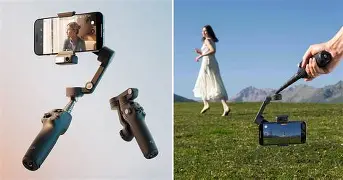
Out of the box the Osmo Mobile 8 felt refined. The foldable form factor makes it easier to slip into a daypack compared to older full-size gimbals I've used. Setting it up most days was straightforward: unfold, attach my phone, power on, open the DJI app, and pair. Once paired, typical modes like Follow, Tilt Locked, and Sport were available and responsive.
What I appreciated immediately was the speed from unpacking to shooting. In my experience, when I’m chasing a moment—kids playing in the yard, a street musician, or a quick travel panorama—these few seconds matter. The OM 8 got me rolling faster than lugging a mirrorless rig and certainly faster than a tripod setup.
Build, Ergonomics, and Portability
The Osmo Mobile 8 is lightweight enough to hold for extended recording sessions, and the handle feels comfortable in my hand. The foldable design actually made a bigger difference than I expected. I found myself keeping it in my bag more often because it doesn't demand a whole compartment.
One small friction point: the magnetic quick-release (if you use a magnetic mount system) can be extremely convenient, but I noticed it becomes finicky with thicker phone cases or accessories such as large camera bump protectors or certain wallet-style cases. I had to remove a thick wallet case on a few occasions to get a perfect fit and reliable connection. If you favor slim cases, the magnetic interface will feel seamless; with chunkier protection, plan for occasional balancing or case removal.
Stabilization Performance
How well does it stabilize? In my testing—walking pace, brisk walking, and a few short jogs—the footage was consistently smoother than handheld without a gimbal. Walking shots show minimal vertical bounce, and panning is fluid when I gently move the joystick. I did a run-and-gun test during a short trail hike: following someone on a winding path at a moderate pace, the Osmo Mobile 8 tracked reliably and kept the subject centered most of the time.
That said, nothing is magic. In very fast, jerky movements or abrupt pivot turns, you'll still see micro wobbles. When I pushed into sprinting territory, I observed slight motor strain; the footage was still improved over raw handheld, but not perfect. For action sports or intense running sequences, I'd still recommend a dedicated action camera on a chest or helmet mount.
App, Modes, and Intelligent Features
The DJI app remains the control center. I found ActiveTrack and the gesture controls to be genuinely useful: starting a clip with a gesture or having the gimbal lock on a moving subject made solo shooting practical. ActiveTrack generally reacquired the subject quickly if temporarily lost, though it did sometimes misidentify background movement—like a passing cyclist—as the primary subject in crowded environments.
Time-lapse and hyperlapse modes are fun and have become part of my travel routine. I appreciate the built-in templates for cinematic moves; they take out the guesswork for smooth reveal shots. One thing I noticed is that some features apply digital stabilization within the app, which can introduce a small crop. For my typical social posts this was fine, but for archival footage I prefer to shoot in a neutral mode to keep the full field of view.
Discover deals on Electronics — updated daily.
Browse Now →Battery Life and Charging
Battery life is always a practical concern. In my usage—typically one to two hours of active recording or a few hours of intermittent use over a day—I was getting between 6 to 8 hours of real-world runtime before needing to recharge. That covered multiple short shoots across a weekend without worrying about power. Charging via USB-C felt convenient; a full charge took roughly 1.5 to 2 hours depending on the charger I used.
Note that battery life varies with active tracking and motor load. When I used heavy phones or attached accessories like small LED lights, the motors worked harder and the runtime dropped accordingly. If you plan full-day shoots, bring a power bank and an occasional cooldown break for the gimbal.
Controls, Buttons, and Motor Noise
The joystick, mode button, and record button are all placed within easy thumb reach. I liked that I could switch between landscape and portrait layouts quickly for different platforms. One small annoyance: the tactile click on the mode button is a touch firm for my hand size, so longer sessions made me aware of finger fatigue. Not a dealbreaker, but noticeable.
Motor noise is impressively low overall; however, with the phone's microphone very close, you can pick up faint whirring during quiet indoor shots. In outdoor e…
Compatibility and Limitations
Compatibility is straightforward for most modern smartphones. However, I ran into one practical limitation: very heavy phones with large lenses can push the gimbal close to its payload limit. When I temporarily mounted my heftier-case phone with a clip-on lens, the stabilization suffered and motor strain increased. In my experience, if you frequently use heavy accessories or large lens attachments, check the gimbal’s recommended payload and test balance before committing to long shoots.
Daily Workflow Tips I Picked Up
- Always update firmware before a major shoot—DJI pushed a stability fix during my second month that noticeably improved ActiveTrack.
- Calibrate the gimbal in a flat, stable location when you first use it in a new orientation or with a new phone.
- If you use a thick case, keep a slim case handy. I swap cases when I need the fastest magnetic mount use.
- Use the built-in tripod or a small counterweight when shooting low-angle tracking—helps reduce motor load and gives a steadier base.
- For audio-sensitive shoots, either move the phone mic away from the gimbal motors or use an external lav or shotgun mic.
Pros & Cons
Pros
- Fast to deploy: Folding design and quick pairing saved me time on spontaneous shoots.
- Solid stabilization: Smooth walking shots and reliable subject tracking in most scenarios.
- Comfortable ergonomics: Light and balanced for extended handheld use.
- Good battery life: Real-world runtime covered full days of casual shooting.
- Useful app features: Time-lapse, templates, and ActiveTrack are practical for solo creators.
Cons
- Magnet sensitivity to cases: Thick or chunky phone cases occasionally interfere with the magnetic mounting and balance.
- Performance under heavy loads: Large phones with clip-on lenses or accessories can cause motor strain and reduced runtime.
- App occasional mis-tracking: In crowded environments, ActiveTrack can be confused by background movement.
- Audio pickup: Motor noise is quiet but can be picked up on the phone’s built-in mic in very quiet scenes.
Comparison: Osmo Mobile 8 vs. Older/Midrange Gimbals
| Feature | Osmo Mobile 8 (my experience) | Typical older Osmo / Midrange gimbal |
|---|---|---|
| Portability | Very compact and easy to fold; carried daily without complaint | Often bulkier or less convenient to stow in a small bag |
| Stabilization | Smooth for walking and panning; minor issues under aggressive motion | Good but sometimes less refined during panning and tracking |
| Battery life | 6–8 hours real-world mixed use | Varies; older units often in the 5–7 hour range |
| App features | Robust: templates, time-lapse, ActiveTrack works well | Functional but may lack newer templates or tracking improvements |
| Case & accessory compatibility | Magnetic quick-release is great with slim cases; struggles with thick cases | Clamps can be more forgiving for case thickness but slower to mount |
Who Should Buy the Osmo Mobile 8?
In my experience, the Osmo Mobile 8 is best for:
- Mobile creators who prioritize quick setup and portability.
- Travelers who want better handheld footage without heavy gear.
- Solo content creators who rely on ActiveTrack and app templates for self-shooting.
- Anyone who uses a slim-case phone and values battery life over carrying extra accessories.
It might be less ideal for:
- Users who always pair heavy add-ons (large lenses, hefty cases) with their phones.
- Action sports shooters who need extreme stabilization under high-impact conditions.
- Filmmakers who demand absolute silence from their stabilizer during ultra-quiet recordings using the phone’s built-in mic.
Buying Guide: What to Consider Before You Buy
When I evaluated the Osmo Mobile 8, I walked through a few practical checks I recommend you do too:
1. Check phone size, weight, and case thickness
I tested multiple phones and cases. Confirm your phone's dimensions and any case you plan to keep on before assuming perfect compatibility. If you regularly use a thick protective case or add-on lenses, plan to test the balance first or consider switching to a slim travel case when shooting.
Looking for the best Electronics deals on Amazon?
Browse Now →2. Think about your shooting style
If you mostly do walking vlogs, social vertical videos, or casual travel B-roll, the OM 8 is tailored for that workflow. If you need extreme stabilization for sports or high-speed action, evaluate whether additional mounting solutions or specialized stabilizers are better.
3. Plan for audio
Motor noise is low but present. If your work often includes quiet interviews or ambient sound, budget for an external microphone that isn't attached to the phone body, or adjust your placement to minimize motor pickup.
4. Accessories that matter
Useful accessories I bought or considered during testing include a small counterweight for extra-heavy phones, a compact tripod for stable time-lapses, and a padded carry pouch. These made my workflow smoother and reduced motor strain during long, stationary shoots.
5. Firmware and app support
Maintain firmware updates. During my three months, a firmware update improved tracking responsiveness and motor smoothing. If you buy one, check for updates and install them before a major shoot.
Final Thoughts and Conclusion
After three months with the Osmo Mobile 8, what I found was a highly usable, travel-friendly gimbal that truly improved my everyday phone footage. I appreciated how quickly I could go from bag to rolling, and the stabilization noticeably elevated casual videos without demanding much technical overhead. The ActiveTrack and creative templates expanded what I could do alone—something I value as someone who often shoots solo.
One thing that bothered me was the sensitivity to thick cases and heavier phone setups. That limitation is real enough that it shaped how I prepared for shoots: I either swapped cases or accepted a small tradeoff in battery life and stabilization when I kept everything attached. Motor noise is another minor annoyance for quiet shoots, though it never impacted most outdoor or ambient-noise environments.
Overall, in my experience the Osmo Mobile 8 is a practical, polished gimbal for creators prioritizing portability and quick, reliable stabilization. It's not perfect for extreme sports or heavily accessorized phone setups, but for day-to-day vlogging, travel clips, and social content creation, it became my go-to tool within the first few weeks. If you shoot often with your smartphone and want a device that removes a lot of the friction of producing smooth, dynamic footage, this gimbal is worth serious consideration.